
Screen to surface
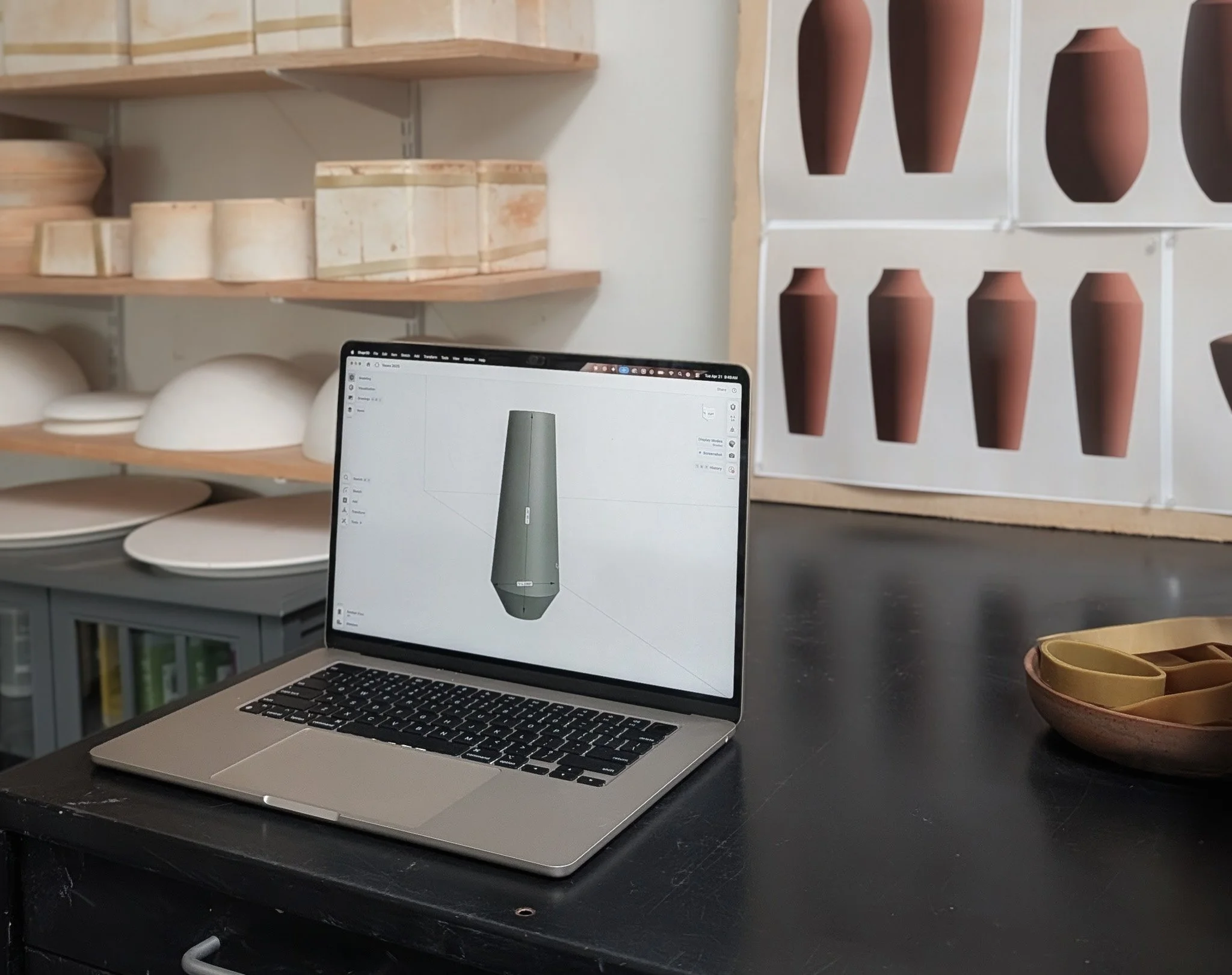
3D form rendering in the studio. Resolving shape, scale, and weight before the clay enters.
The process starts on screen. A form gets built in three dimensions — modeled, rotated, lit from different angles, measured against what the clay will actually do when it's liquid and under pressure. Wall thickness determines weight. The angle of a shoulder determines where light breaks. These decisions happen digitally, at a scale where half a millimeter changes whether an object feels considered or approximate.

The surface of a digital form; geometry before it has presence.
From that model, a mold. Plaster, poured around a form that took weeks to resolve, then cut apart into sections that register against each other precisely enough that the seam nearly disappears. Pour channels engineered so the slip fills evenly. The mold is as designed as the object — it just never gets seen.
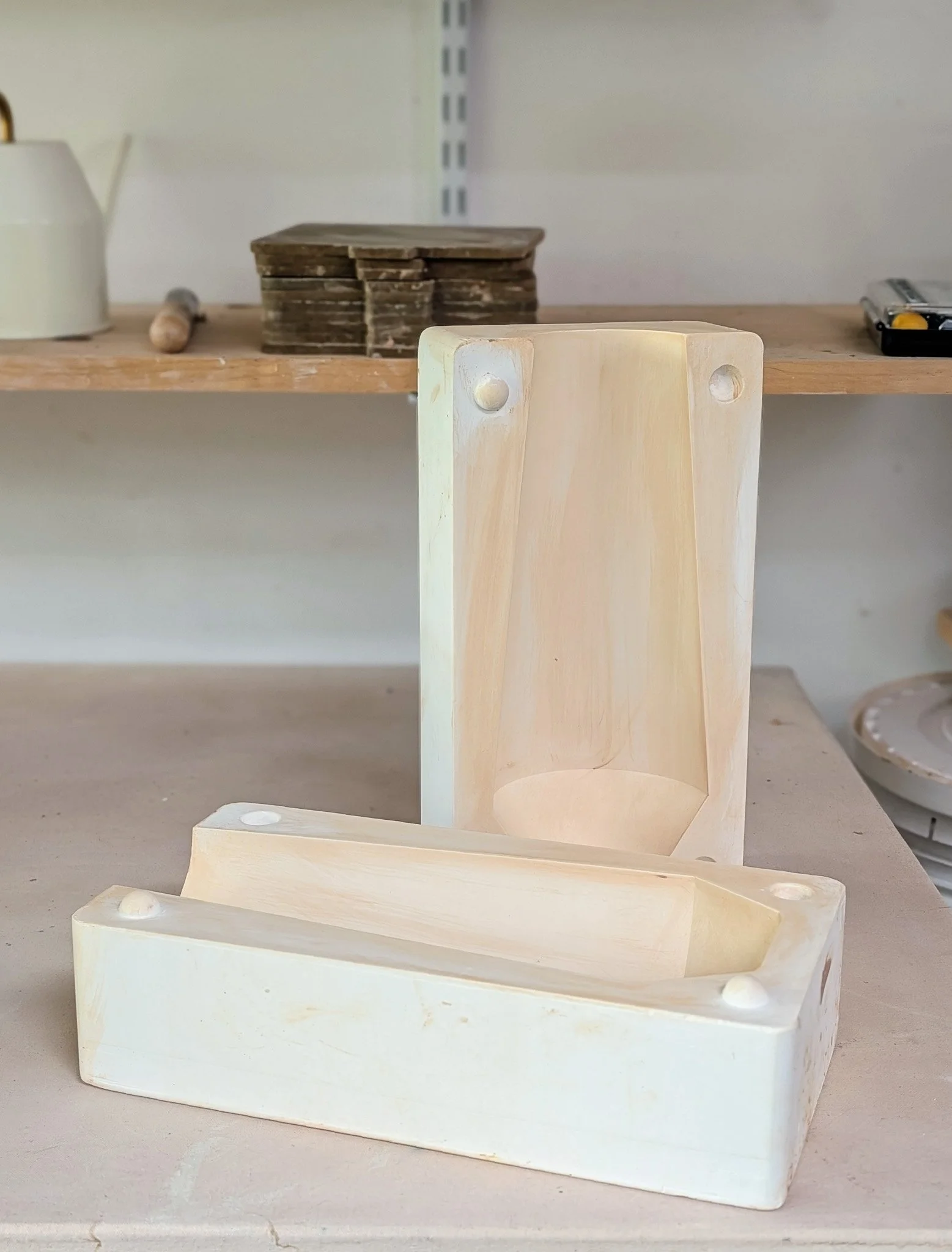
Open mold, negative cavity, registration marks.
Then slipcasting. Liquid porcelain into the negative. The form holds. The surface is where the material gets to decide — how the glaze breaks over an edge, where the color pools or thins. The geometry is controlled. Everything else negotiates.
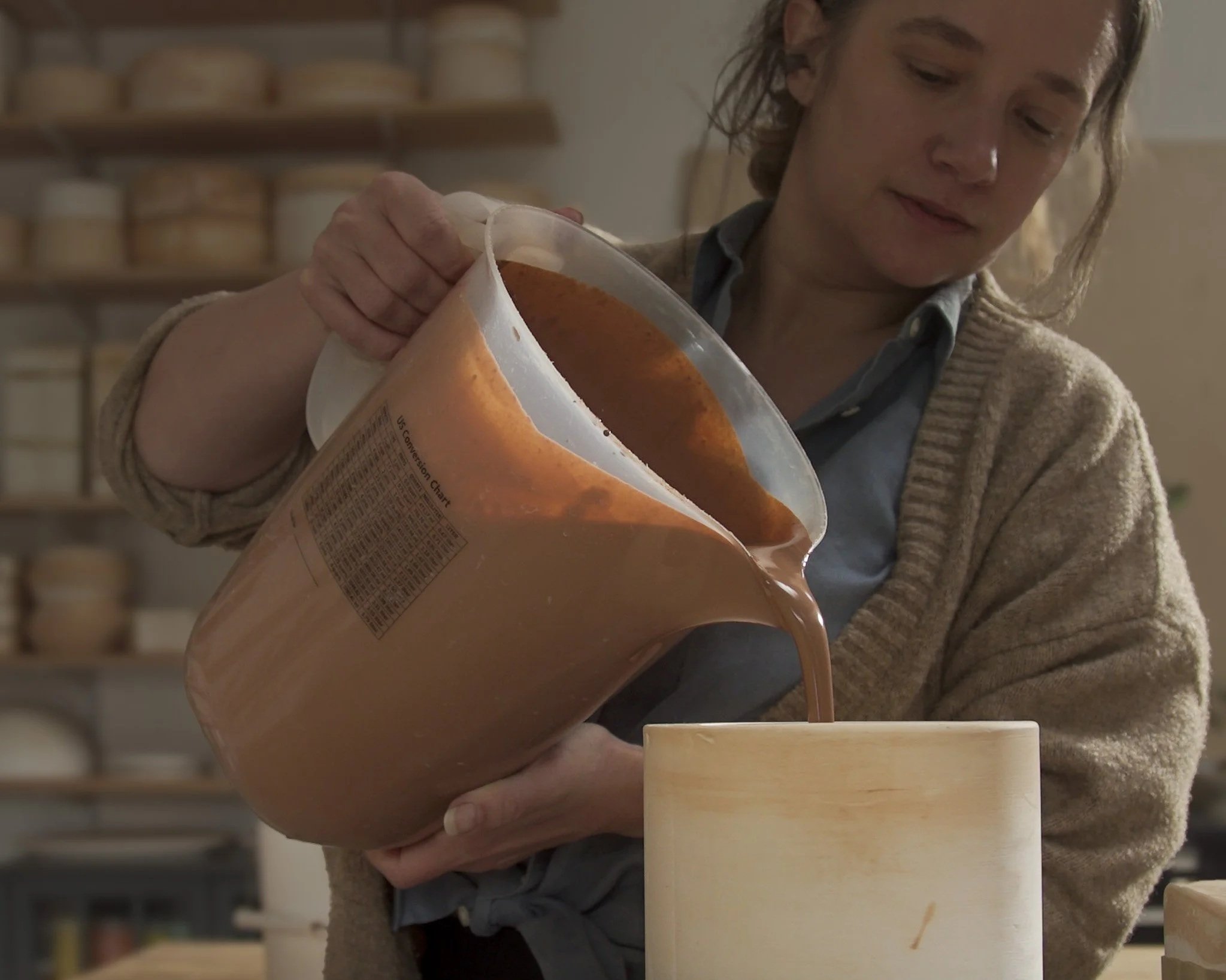
Pouring liquid stoneware into engineered plaster. Photo by Jeff Alberts.
This is the process behind every piece. It's been running for months. The objects are starting to come through.

Finished Column vase with an unrepeatable glaze.
New Earth Ceramics makes stoneware objects in Los Angeles.
Sign up for the email to see new work first →